
Quick answer: For general-purpose degreasing, dilute APC at 1 part cleaner to 4 parts water. Spray the surface, rinse thoroughly with clean water, and do not let the product dry.
APC — our Concentrated All-Purpose Cleaner — is built to cut grease and grime, and like any concentrate, it only works the way it's supposed to at the ratio it's designed for. Guess at the mix and you either waste product or under-dilute a corrosive cleaner on a surface it was never tested at that strength.
The manufacturer's directions
- Mix 1 part APC with 4 parts water for general-purpose degreasing.
- Spray onto the surface to be cleaned.
- Rinse the area thoroughly with clean water.
- Do not allow the product to dry on the surface.
That's the complete, confirmed method — one dilution, no separate full-strength instruction. If you've seen advice elsewhere suggesting a stronger, undiluted application for heavy soiling, that's not the instruction we publish here.
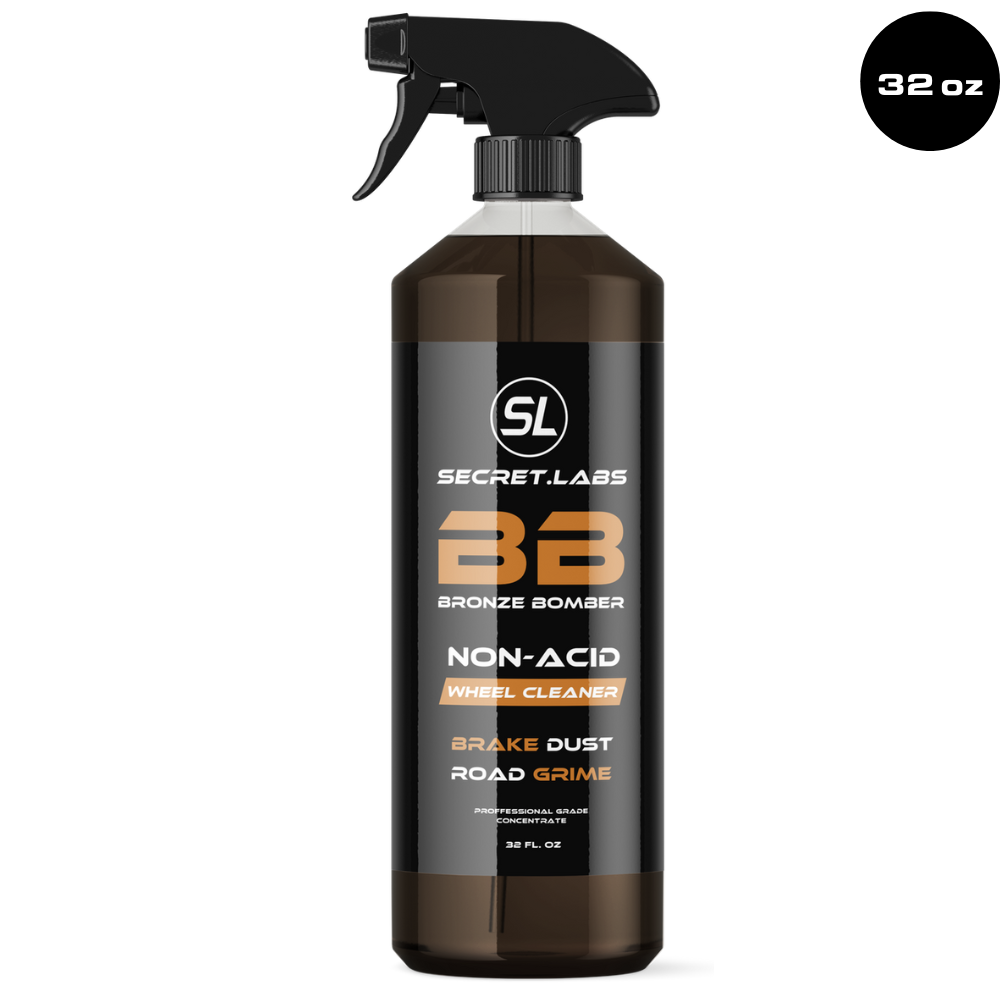
There is no confirmed dwell or contact time for APC. Don't import Bronze Bomber's 30–60 second figure — that number belongs to a different product with a different formula, and APC's own directions don't include one. Spray, work it in, and rinse.
Where to use it
APC is intended for general-purpose degreasing on vehicle surfaces that have picked up grease, road film, or grime — wheel wells, door jambs, and similar heavily soiled areas. It is not confirmed for use in the engine bay, and no engine-safe claim is made for this product under any circumstances.
Because a full list of confirmed and excluded surfaces isn't yet documented, spot-test anything you're unsure of in an inconspicuous area first, and don't assume a surface is safe simply because it isn't on any exclusion list you've seen — that's an absence of information, not a confirmation.
Technique that helps
(General practice, not manufacturer directions.)
- Work on a cool surface out of direct sun where you can — a hot surface can cause a spray cleaner to flash off before it has a chance to work.
- Spray in sections you can finish before the product has a chance to dry, rather than covering a large area all at once.
- Agitate with a soft brush or cloth on textured plastic or heavier grime; a light job usually needs none.
- Rinse thoroughly rather than wiping dry — rinsing is the confirmed step, and skipping it is the most common way residue gets left behind.
Safety
APC's signal word is DANGER. CAUSES SEVERE SKIN BURNS AND EYE DAMAGE. May cause respiratory irritation. This is a corrosive concentrate.
Wear gloves, protective clothing, eye protection and face protection. Use outdoors or with good ventilation. Avoid breathing fumes, mist, vapor or spray. Wash skin thoroughly after handling. KEEP OUT OF REACH OF CHILDREN.
Full precaution and first-aid information is on the product label and in the Safety Data Sheet.
One dilution, always
There is no confirmed "heavy-duty" or full-strength setting for consumer use. If a job seems too big for a single pass at 1 part APC to 4 parts water, the answer is a second application at the same dilution after rinsing — not a stronger mix.
FAQ
What's the correct APC dilution?
1 part APC to 4 parts water for general-purpose degreasing. That's the only confirmed ratio.
Can I use it full strength for tough grease?
Not as a published instruction here — the confirmed method is a single dilution. If one pass doesn't clear it, rinse and repeat at the same ratio.
How long should I let it sit before rinsing?
No dwell time is confirmed for APC. Spray, work it in, and rinse — don't let it dry on the surface.
Do I need to rinse it off?
Yes, thoroughly, with clean water, every time.
Is APC safe to use in the engine bay?
No — this isn't a confirmed use, and no engine-safe claim is made for APC under any circumstances.
Is it corrosive?
Yes — full protective equipment is required: gloves, protective clothing, eye and face protection, and good ventilation.
Is it citrus-scented?
Not currently confirmed by any manufacturer source, so we're not making that claim here.
Can I use it on any surface?
Not confirmed either way for most surfaces. Spot-test anything unfamiliar first.